
The Spiritual Question
For many, BDSM is simply another form of sexual interaction. However, certain BDSM experiences can also take on a spiritual dimension for those who engage with them consciously. They create an opportunity to step outside of everyday predetermined roles and assumptions and to examine these with greater awareness. Letting go of these identities and control can parallel certain mystical traditions which are rooted in transcendence and surrender. Preparing elaborate gear, wearing certain non-casual clothes, taking on specific roles, creating an atmosphere with lighting, protocols, and certain body language, and developing a sense that what happens is out of the ordinary can mirror ceremonial practices. Textures, elaborate BDSM furniture, and symbolic acts can further contribute to this atmosphere and offer an opportunity to use the practice to cultivate the body, mind, and spirit.

I understand spirituality holistically, as opposed to understanding it as a practice of renunciation. I see spirituality as a way to cultivate self-awareness, serenity, and wholesome connections, first with oneself and then with others. In this sense, every aspect of life can serve as an opportunity for further development. That can include sexual desire: learning to channel it toward attention, imagination, and connection and not only consumption; examining an individual’s relationship with suffering; experimenting with discomfort, pain or boredom instead of constantly seeking stimulation; and looking at what Carl Jung called the shadow without simply projecting it outward. For Jung, the shadow refers broadly to those parts of oneself that are repressed or difficult to recognize as part of who one is. Instead of treating these aspects solely as something to eliminate, one can bring them into conscious awareness through ongoing reflection, with the help of a therapist, and creatively explore one’s relationship with them. In this sense, the shadow offers fertile ground for experimentation and play. If these aspects of oneself can be practiced and cultivated in the effort to become more whole, then BDSM can also take on the qualities of a spiritual practice.
BDSM is neither a panacea, nor does it have an inherent spiritual meaning. It can, nonetheless, function as a mirror for societal blind spots and the unchallenged norms imposed on individuals. It can be an initial path toward seeing beyond social conditioning and questioning what is often taken for granted.
Learning to Desire Differently
Sex often has a consumption-oriented tone and is not always approached as a way to deepen awareness. Tantra, broadly understood as a diverse group of Indian religious and philosophical traditions, offers examples of sexuality being approached as a practice which is not necessarily solitary, as spiritual practices sometimes are, but as a spiritual technology that can be used by long-term partners to explore consciousness and deepen awareness. The term tantra in the Indian traditions also refers to a set of texts describing systems, methods, instruments, techniques, and practices. It is an ancient tradition involving various intensive practices, often undertaken with the guidance of spiritual teachers. Naturally, tantra is not the same as BDSM. However, BDSM, in a similar way, can become a creative project used by two or more partners, often in a long-term relationship, to explore realms together that are not easily accessible through short-term encounters.

In everyday interactions, orgasm and access to one's partner's body are often considered a necessary part of sexual chemistry. A wish for denial, celibacy, or the absence of orgasm is seen as problematic, and sex might be treated as a barometer of the relationship. In marriage, couples often feel that they have to satisfy the sexual needs of their spouse as if this were a requirement for maintaining a happy marriage. In BDSM, however, gratification comes from other places and does not necessarily have to be the main goal. In scenes, things such as chastity cages, orgasm denial, and service can be experienced by many as deeply fulfilling ways of enjoying sensuality and exploring different paths of their sexuality. For some submissives, being in chastity for one person is more important than having sex. However, this is not quite the same as celibacy for spiritual reasons, as chastity still offers erotic satisfaction of some sort. Abandoning the need for gratification at any given moment also allows the submissive to focus on things that benefit their dominant partner. They might gain a lot of time if they are not constantly focused on the erotic. Ruined orgasms introduce another dimension to this question: they reveal that orgasms offer release, but also leave someone exhausted and filled with feelings of serenity, bonding or even melancholy. A ruined orgasm, however, serves as a playful punishment, where the energy is not released and the frustration of one partner not finding completion and seeing the other solely as the source of it reinforces the idea that the Dominant plays the decisive role in determining when, how and if any gratification occurs, rather than the submissive simply surrendering to their own “selfish” desire. Ruined orgasms or refusing them altogether create an opportunity to experience desire without immediately satisfying it, and to become more aware of anticipation, frustration, as well as control itself. Such kinks show that an experience does not have to culminate in orgasm to be satisfying and meaningful.

Leaving the obsession with sex aside, partners can instead focus on other dimensions of their relationship, such as gaining a better understanding of each other through activities, tasks, creativity, and humor. Sex does not have to be the only foundation of intimacy, and a relationship does not have to revolve around sexual gratification in order to remain substantial. Nevertheless, this is not an argument against kinky sex. People should be free to approach intimacy in whatever way feels right for them. Instead, it is an invitation to consider what might be achievable when sexual practices are approached with a distinct mindset. That said, the absence or re-examination of desire, or building it anew, can emerge as a creative project with the potential to shift relationships from simply revolving around sex toward exploring the essence of the relationship itself. BDSM therefore functions as a kind of laboratory for learning to desire differently. Through these experiences, partners may recognize that making space for someone else's happiness, whether through extra time spent in service, offering a massage, completing a task, or simply giving attention, can be evenly erotic and rewarding as having an orgasm. The question here is how to create, postpone, transform, and discover forms of intimacy that might otherwise remain relatively underexplored.
When the Ordinary Takes on New Meaning
Rituals usually develop naturally after some friction arises between two play partners. A ritual is more like a tool or routine that both partners should find relatable. It helps them step away from everyday life and enter the atmosphere of an unusual experience slowly. They often mark the beginning and end of a session. Rituals naturally occur at any point, but having established rituals between familiar partners is an indicator of a robust connection and strong communication between them. They take many forms. Some examples are: sending messages and pictures before or after the session, wearing certain garments that are not casual, writing thoughtful personal cards, drawing sketches of intimate moments and keeping them as a diary or reminder, preparing certain meals or drinks, cleaning after the scene together, conditioning leather or polishing latex together, putting on and removing a collar, meditating, or preparing a bath with some favorite oils after the end of the play scene. The importance of these acts is the shared meaning attached to them. A mundane action can be approached as a ritual when it foster a sense of connection because it is a unique and intimate experience that one builds and shares only with their partner. With that in mind, rituals are something like a shared secret, a way of marking the transition between different stages of a session, or simply a way of caring for the other person's relaxation and well-being.

BDSM and the Discipline of Inconvenience
A life organized entirely around avoiding discomfort limits familiarity with experiencing it, even though discomfort is a large part of the human experience. Robots clean homes, minimal spherical devices talk to people with soothing female voices and help with all sorts of things. Shopping happens online, where prices can be compared and reviews read before buying almost anything. Food and groceries are delivered to the door, and most payments happen online. Critics' reviews of restaurants are readily available, so there is almost no chance of encountering mediocre food. Instant sexual gratification is just a click away. Many of the small situations in which people once had to wait, interact with strangers, solve problems themselves, or tolerate discomfort have disappeared. Yet somehow, the time gained is often spent online. I used to stand in the queue infuriated because I thought it was a waste of time. Then I began asking myself what I would actually do with those ten minutes if I didn't have to wait. The answer was usually to look at my phone. That made me realize that the problem was not the ten minutes of waiting, but my inability to sit with the discomfort of doing nothing stimulating. BDSM creates experiences where discomfort is intentionally introduced into a controlled environment. This includes uncomfortable positions, body inspection, feeling cold while naked, being asked to remain still, or encountering situations that do not immediately align with pleasure or have to make sense.
I remember once during a group play, ordering a submissive client, who had an intense interest in humiliation, to have an unusual interaction with a small basket. My colleague and I had a lot of fun with the task. At the end of the session, when we talked, he told me that overall the experience had been really satisfying, but the basket task did not make any sense to him. I preferred to stay silent and let him sit with the experience instead of defending my idea of the task. Some tasks might seem silly. But regardless of whether someone initially considers the experience clever, being asked to remain with it offers an opportunity to become more comfortable with discomfort itself. The point is about learning that discomfort does not always need to be right away removed and replaced with desire and soothing comfort, or even to have no purpose beyond giving one's partner something to laugh about. Ultimately, BDSM practice invites a different relationship with discomfort itself.

I practice yoga and often contemplate the similarities between BDSM and yoga. In yoga, a person may have to remain in a posture that feels uncomfortable or even slightly funny while continuing to breathe and remain present. With practice, they become more capable of breathing through the discomfort and stiffness in their muscles while remaining in the position. In yoga, certain breathing exercises or specific postures are used deliberately to bring stimulation, overstimulation, serenity, creativity, and imagination. Eventually, through practice, one understands how, when, and which postures and breathing techniques to use to help the body and mind achieve their desired state. I see a parallel here with BDSM, especially with predicament play. By deliberately entering situations that are inconvenient, a person practices remaining present as an alternative to immediately seeking escape. Over time, this may change their relationship with unease itself, not necessarily making discomfort pleasant, but making it less threatening. Life does not always need to be optimized for comfort and convenience. Someone might eventually understand that pain or restriction can help them when they are dealing with a lack of focus or understimulation. Others might struggle with overstimulation and the need to always be doing something. A Dominant here could help her partner expand their relationship with boredom by giving them menial tasks, such as cleaning chores, to help them cultivate presence and even find some satisfaction in making things nice, clean and tidy.
The Mirror
Within BDSM spaces traditional roles are flipped, and gender identities explored in ways that challenge the assumptions carried into everyday life. Over time, playing with various roles naturally leads someone to observe their own reactions and begin to bring new understandings of identity and creative self-expression into their life. This process has the potential to help kinksters develop greater trust in themselves and become less judgmental toward themselves and therefore potentially less judgmental toward others. By experimenting with identities and roles in a space of mutual trust, partners discover that the boundaries they once considered fixed are more flexible than they thought. BDSM serves as an exploration of power and surrender, which may feel deeply awkward or even frightening to some. Surrender can mean allowing someone else to make decisions, choosing a less-traveled path, or experiencing moments in which one’s own needs are not immediately met without responding with anger or retaliation. In this sense, the mirror of BDSM reveals how people respond to frustration, loss of control, challenges to identity and ego, and situations in which someone else's needs take precedence. Those moments are opportunities for self-understanding and not obstacles that have to be overcome.

Encountering a range of people within the scene whose desires seem strange or unacceptable to us, including forms of edge play, serves as a mirror for one's own tolerance of diversity. Couples who do not seem to fit traditional expectations, kinks that are literally dirty, or practices that we consider taboo serve as reminders of personal limits and one's capacity for acceptance .These interactions create fertile ground for asking why certain desires feel unsettling, what assumptions lie behind these reactions, and where such judgments come from. Growing tolerance and making room for diversity to exist without judgment create greater inner space for embracing personal idiosyncrasies. This may even allow the exploration of aspects of the self once considered taboo, deepening human experience while loosening the rigidity of the ego.
Nurturing the Opposites
Considering how heavily gender roles are enforced in many societies, a man who openly experiments with femininity risks ridicule, exclusion, or much worse. Personally, when I see a cisgender man performing feminization in front of me, I first see an act of deep trust: someone experimenting with his image in my presence. I see this as an act of relief from the heaviness of constantly performing a gender role. The way someone experiences cross-dressing can shift from one moment to another and throughout their life. Under the guidance of a supportive and nurturing Dominant, shame can become something that is creatively explored and not simply avoided or endured. When desire is involved, the same experience creates new paths for how someone perceives themselves. I know many colleagues who consider it a red flag when a man feels humiliated by cross-dressing but has the desire for such a session, or when someone uses the word “sissy.” I respect these perspectives, but I also think it is worth asking what the desire for such a scene might mean for the person involved. I have also come to recognize that my own reactions toward feminization scenes can reveal something about myself. Once, I was triggered by a submissive who described cross-dressing as a woman humiliating. I noticed that it touched something in me; a hidden shame connected to my own gender. Internalized misogyny is real, even though many women may not recognize it in themselves. This made me wonder whether some of the humiliation men experience when cross-dressing may extent beyond the act of becoming a woman to confronting their own position within a society where femininity has historically been given less status than masculinity.

Humiliation can open a dialogue and raise questions that are seldom raised: Why is a man discouraged from wearing makeup and enhancing his appearance? How crucial are historical periods in defining what is allowed and socially accepted as gender expression? For example, forms of cosmetics, elaborate wigs, ornate clothing, and heeled footwear have all been associated with masculine fashion in different historical and cultural contexts, even though many of these things are now strongly coded as feminine in contemporary Western societies. Why is vulnerability, service to women, or being desired and sexually objectified considered incompatible with masculinity? Why should a man have to change his body language, voice, manners, or clothing to conform to an expected masculine role? And why should expressing oneself outside those expectations carry the fear of being bullied and socially excluded? These questions come to shape the dynamics of a BDSM feminization scene. A person could discover that what they initially experienced as humiliation was connected not simply to femininity, but to the social meaning attached to femininity. They may begin to separate their own desires from the rules they have inherited. The exploration can also affect the Dominant. In a feminization/Femdom dynamic, for example, a cisgender woman can find herself confronted with her own ideas about femininity. Watching someone perform a highly exaggerated version of femininity can feel arousing or even deeply humiliating in its own way. The submissive may feel degraded because they believe they are failing to be “woman enough,” while the Dominant simultaneously questions what it means to perform femininity at all.
I remember one session in which I asked my submissive client to dance for me. He chose to wear a leather mini dress and over-the-knee leather high-heeled boots. I found myself both aroused and amused by the awkwardness of his movements. Eventually, we danced slowly and sensually together, and gradually his body became less restrained and more expressive. The hesitation and shyness I saw in him were unexpectedly tender and sweet. I felt my own second-hand shame transform into a deep sense of intimacy and desire in response to his timid yet courageous act. The courage did not lie in the idea that femininity is a disgrace, but in his willingness to transgress social roles and choose me as the person with whom to do so. This is what makes gender role-play so interesting to me. It is an opportunity to witness the boundaries between masculine and feminine, humiliation and pleasure, performance and identity, awkwardness and beauty becoming blurred.
Another State
During BDSM scenes, people sometimes experience altered states of mind in which ordinary patterns of attention and awareness temporarily change. The spiritual significance, however, resides in the insights that emerge through the altered state. Such intense scenes offer the so-called “subspace,” which is a personal experience that is described as being deeply engaged with the moment for a prolonged period, sometimes accompanied by a sense of deep fullness. Time might feel distorted, and a sense of lightness and letting go can be achieved when the person no longer struggles to maintain control. Someone might ask themselves after the cessation of the session: What happens to me when I let go of control and surrender? What helps me sit with discomfort? Through pain, one can explore endurance—how desire can make someone willing to tolerate more pain, and how this relationship between pain and sexuality can translate into everyday life and reshape one’s understanding of intimacy. What happens to my sense of self when my attention shifts away from thought and toward sensation? Some of these questions are closely related to altered states of mind, in which attention narrows and deep trust in a partner can create extraordinary experiences that may be difficult to access while sober, in ordinary life.
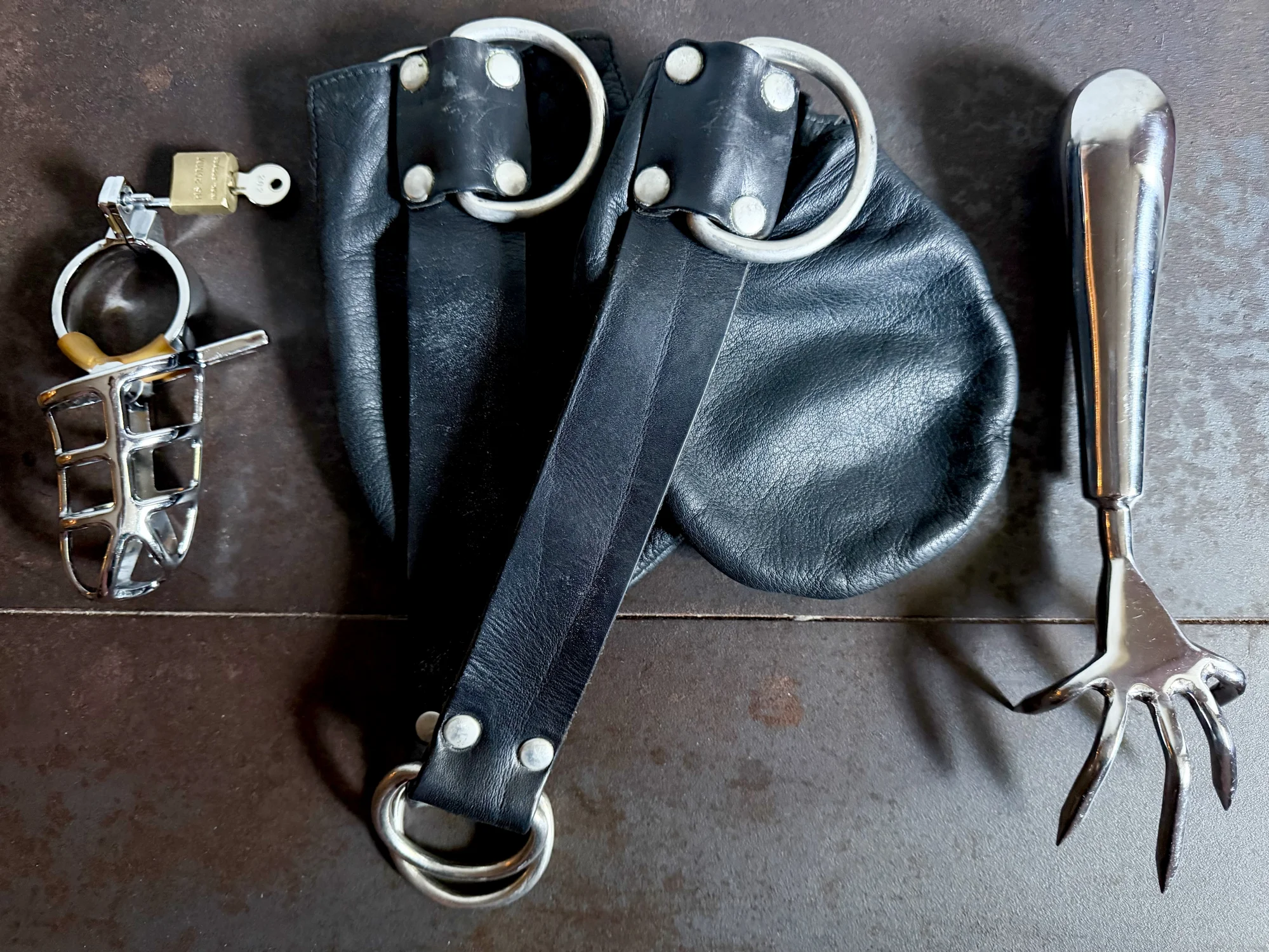
These personal experiences help submissives and dominants to be more present and feel more deeply connected to their bodies. Bondage, for example, draws attention to breathing, physical sensations, and the immediate experience of being restricted. Other forms of sensory play can similarly shift attention away from everyday worries and thoughts toward the body itself.
BDSM practice serves as a vehicle for developing a particular relationship with oneself and with feeling and breathing, while moving beyond the realm of logic and self-control, which seem to hold greater significance in everyday life for many people.
Lessons That Can Be Integrated
After the end of a session, some of its lessons can be integrated into daily life, much as can happen with other spiritual practices. Misunderstandings are much more common than one tends to expect, and learning how to work through them can develop into one of the most enriching parts of the process. Communication is a subject I am still working on myself. I see it as a work in progress, because there is always something I can learn from my mistakes and from the limits of my own self-awareness. In order to communicate one's needs effectively, one first has to deepen one's understanding of those needs. Only then can they be shared with another person honestly and with a strong enough voice to be heard. This is not a responsibility belonging solely to the submissive or solely to the Dominant. Regardless of their role, both partners have the task of understanding themselves more deeply and communicate as clearly as possible. There is also the question of altered states. Making sense of these states, or learning to accept them simply as states of consciousness without needing to feel threatened by them, becomes part of the integration itself. There may be parallels with what people experience after extended meditation, although I would not claim that these two are equivalent. What matters the most is that the experience can leave something behind that continues to be reflected upon after the scene has ended. Humiliation is a practice through which one encounters aspects of oneself that are hidden or carefully kept outside everyday life. It exposes the ugly or even what one considers wicked, within oneself. This does not mean that humiliation necessarily beautifies one's life. It nevertheless offers an uncomfortable lesson in accepting one's flaws and recognizing them as part of being human. From there, a person begins to loosen the grip of shame or guilt, or decide that there are aspects of themselves they genuinely want to change.

Something similar happens with the identities through which a person understands themselves. Roles that once seemed unshakable begin to appear, from a more holistic perspective. Recognizing identities as constructs does not necessarily mean that they have to be eliminated. One can understand that an identity is constructed and still inhabit it because it provides meaning or a way of relating to the world. Being able to hold these apparently contradictory positions at the same time can be valuable. It feels absurd because there is often a deep obligation to resolve contradictions; something is either this or that. Yet psychological wholeness comes from becoming capable of remaining with the contradiction rather than instantly choosing one side and dismissing the other. Not quite male, not quite female. Not quite submissive, not quite Dominant. Not quite ashamed, but not entirely free of shame either. The point here is to be at peace with oneself so that these contradictions no longer demand immediate resolution or consume unnecessary mental energy. A person can inhabit a role without believing that the role completely defines who they are at their core.
Integration here means gaining the ability to carry more of oneself beyond the experience and developing a broader capacity to hold contradictions that may emerge within a BDSM scene without feeling the need to resolve them prematurely. Wholeness means cultivating the strength to contain more of the self without rejecting one part in order to accept another.
The Practice Continues
Ultimately, many kinksters wouldn't necessarily agree with viewing BDSM as a spiritual practice. Yet BDSM can help people recognize their blind spots, broaden their perceptions of power and control, as well as expand their understanding of themselves and create unusual forms of connection outside of what they are traditionally told a relationship should look like. They might encounter altered states of consciousness, develop empathy, foster creativity and deep focus, become more aware of their bodies and desires, while exploring new forms of friendship within an inclusive and vibrant community. None of these outcomes are guaranteed. BDSM does not automatically lead to spiritual growth and the practice itself is not what makes an experience spiritual. Its meaning emerges from the intention with which BDSM is approached, the awareness brought into the experience, and what someone does with it afterward. The goal can be to learn to hold more of oneself at once, experience life more fully, and carry that greater capacity into everyday life.