

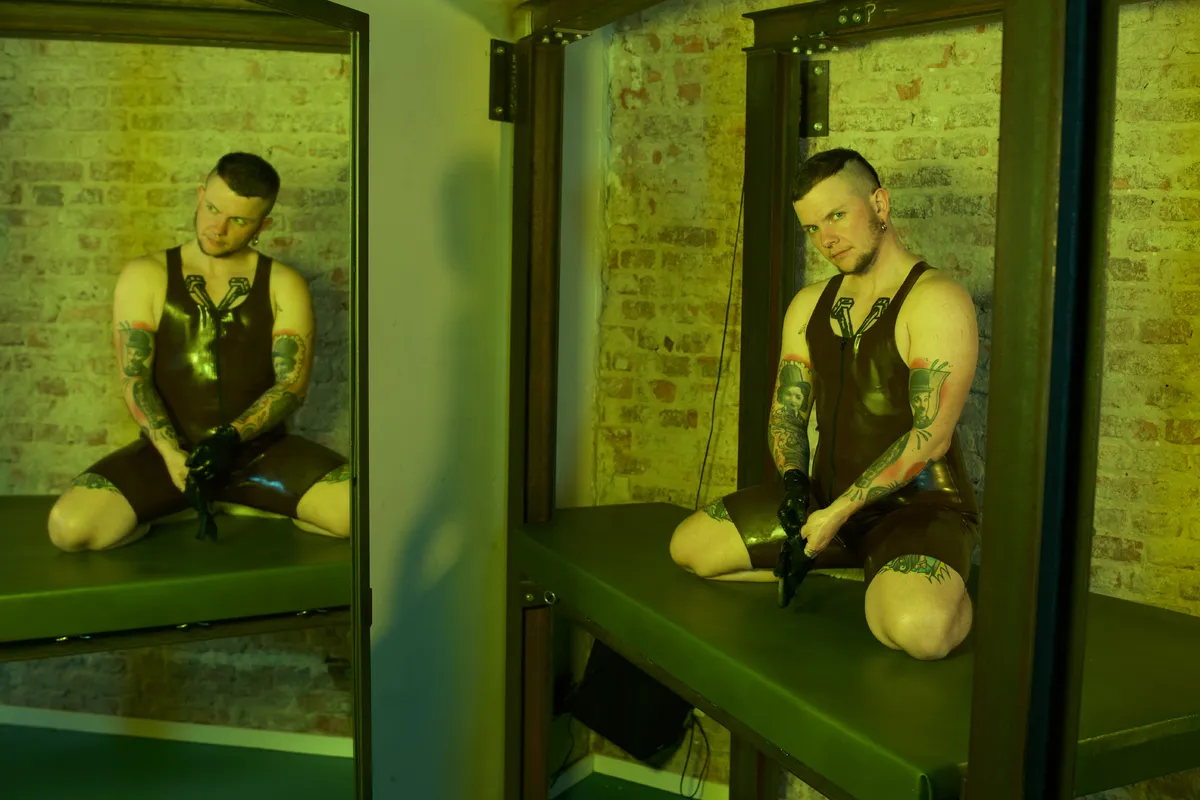
Queer BDSM Spaces: Political and Radical Spaces of Social Justice
Queer BDSM spaces are not just places for sexual expression but also politically relevant spaces that hold radical significance in today's society. In this blog post, we explore how these spaces challenge norms and create new forms of power, pleasure, and community. Our ethnographic study shows that BDSM and queerness are more than just a combination of identities and practices – they offer the possibility to experience social justice in a tangible, lived space.
What are Queer BDSM Spaces and Why Are They Political?
Queer BDSM spaces are not only platforms for individual sexual preferences but also places of resistance against societal norms. These spaces are not just about pleasure in the conventional sense but about negotiating identity, power, and belonging. Queer BDSM spaces challenge societal norms and make them negotiable, providing a space to act against the “self-evident” truths of mainstream society and explore new, alternative forms of coexistence.
In 2025, my colleague and I conducted an ethnographic study titled “Queerness & BDSM: An Ethnographic Study of Queer BDSM Practices and Identities in Berlin.” Our goal was to explore the dynamic relationship between queerness and BDSM, understanding what happens when these two dimensions intersect.
Pleasure Without Norms: How BDSM and Queerness Challenge Social Norms
The central question of our study was: “How do queerness and BDSM relate to each other?” We aimed to avoid a simple juxtaposition, instead focusing on the complex and often ambivalent interconnections between these two fields. In queer BDSM spaces, pleasure is not standardized. It is not defined by societal expectations such as heteronormativity or binary gender roles but emerges from a creative and free negotiation process.
Pleasure in queer BDSM spaces is created through aspects such as intensity, control, surrender, and the play with power and pain, rather than fulfilling heteronormative narratives. The political aspect of these practices lies not in the event itself but in the rupture with the “self-evident” norms imposed by society.
Queer BDSM Spaces as Counterpublics
Queer BDSM spaces are not isolated retreats. They are active counterpublics. These spaces express not only individual sexual preferences but also a collective resistance against the exclusion and invisibility of non-normative bodies and identities. In these spaces, new meanings of body, pleasure, and power are created. Community is not built through conformity but through conscious negotiation and reinterpretation of norms.
In our study, we expanded our theoretical framework using Nancy Fraser’s concept of Subaltern Counterpublics, which helped us understand that queer BDSM practices can be seen as collective responses to social exclusion and discrimination. These are spaces where alternative forms of community and identity emerge, deliberately distancing themselves from the norms of mainstream society.
Bodies, Power, and Redistribution: How Queer BDSM Spaces Redefine the Body
One key finding from our interviews was that in queer BDSM spaces, bodies that are often marginalized in society acquire new meaning. Trans*, non-binary, asexual, disabled, and neurodivergent bodies are not seen as “deficits” but as desirable and powerful. In these spaces, the focus is not on judging the body according to societal beauty standards but on experiencing it as an independent source of pleasure and strength.
Desire in queer BDSM spaces is not distributed along hierarchical norms but is continually negotiated. Power is not hidden but explicitly addressed, with consent replacing coercion and communication replacing assumptions about others.
Social Justice as Lived Practice in BDSM Spaces
The question of how social justice is embodied in queer BDSM spaces is a central part of our study. Social justice is not only achieved through political programs or laws but also through experiential spaces where new ways of living together can be tested. In queer BDSM spaces, it is shown that power does not have to be oppressive, pleasure does not have to be bound to societal norms, and bodies do not need to be judged to find recognition.
Many interviewees reported that BDSM provides them with a way to process experiences of queerphobia and exclusion, transforming them into something empowering. BDSM becomes a tool of self-empowerment, gaining new meaning not despite its ambiguities and complexities, but because of them.
Conclusion: Queer BDSM Spaces as Radical Designs of Social Justice
Our research demonstrates that queer BDSM spaces are much more than places for sexual expression. They are radical counterpublics that enable alternative and transformative forms of pleasure, power, and community. These spaces are not just refuges but dynamic negotiation processes that challenge societal norms and offer the possibility to explore new ways of coexistence.
Despite their ambiguities and contradictions, queer BDSM spaces are utopian designs for social justice in the small. They provide a space where power is renegotiated, pleasure is redefined, and community is created in an inclusive way. They are spaces where social justice is not only demanded but also actively lived.
In the coming years, we plan to further develop our findings and publish them in a scientific article to continue the discussion on queer BDSM practices and their significance for social justice.